 Josh Reid
Most businesses approach a website project with a strong focus on design, features, and functionality.
But what often determines success—or failure—is something less visible: website project management.
Without a structured approach to managing timelines, communication, and evolving requirements, even the most well-designed projects can fall behind schedule, exceed budgets, or fail to meet expectations.
For organizations managing multiple stakeholders, marketing initiatives, and integrated systems, project management isn’t just helpful—it’s essential.
The Hidden Complexity Behind Website Projects
At a glance, a website project might seem straightforward:
- Define requirements
- Design the interface
- Build the functionality
- Launch the site
In reality, most projects are far more complex.
They involve:
- Multiple decision-makers
- Ongoing feedback loops
- Content dependencies
- Third-party integrations
- Marketing timelines and campaigns
Without proper coordination, these moving parts can quickly create friction. This is where structured website management services become critical—not just to keep things organized, but to ensure progress stays aligned with business goals.
Why Website Project Management Is Often Overlooked
Many organizations underestimate the role of project management because it doesn’t produce a visible deliverable.
You can see a homepage design.
You can test a feature.
But you don’t “see” the system keeping everything moving.
As a result, teams often rely on:
- Email chains instead of centralized communication
- Informal approvals instead of structured workflows
- Reactive decision-making instead of proactive planning
This leads to:
- Delays in approvals
- Confusion around responsibilities
- Misaligned expectations
- Increased stress across teams
Over time, these small inefficiencies compound into major project slowdowns.
What Effective Website Project Management Looks Like
Successful projects don’t happen by accident—they follow a structured process.
At a high level, effective website project management includes:
Clear Ownership and Accountability
Every task and decision should have a defined owner. Without this, even simple steps can stall.
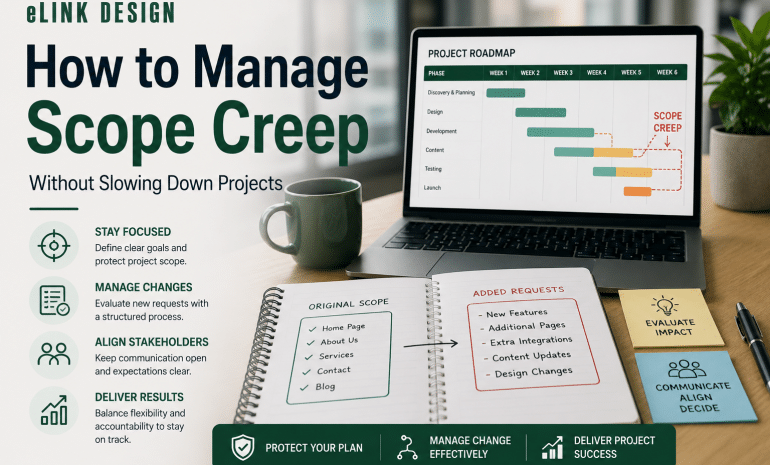
Controlled Change Management
New ideas and requests are inevitable. The key is having a process to evaluate and prioritize them without disrupting timelines.
Alignment With Business Objectives
Project decisions should always connect back to business goals—not just technical execution.
Centralized Communication
All updates, feedback, and documentation should live in one place, reducing confusion and duplicated effort.
Defined Milestones and Visibility
Teams need clear checkpoints and visibility into progress to stay aligned and avoid surprises.
Scalable Processes and Systems
As projects grow in complexity, processes need to scale with them. This includes using the right tools, integrations, and—where appropriate—automation to ensure workflows remain efficient without adding unnecessary overhead.
At a certain level of complexity, many organizations find that internal coordination alone becomes difficult to sustain—especially when managing multiple websites, campaigns, or integrated systems.
This is often where working with a partner experienced in digital project workflows and ongoing coordination can help bring clarity, structure, and consistency to the process.
The Role of Account Management in Project Success
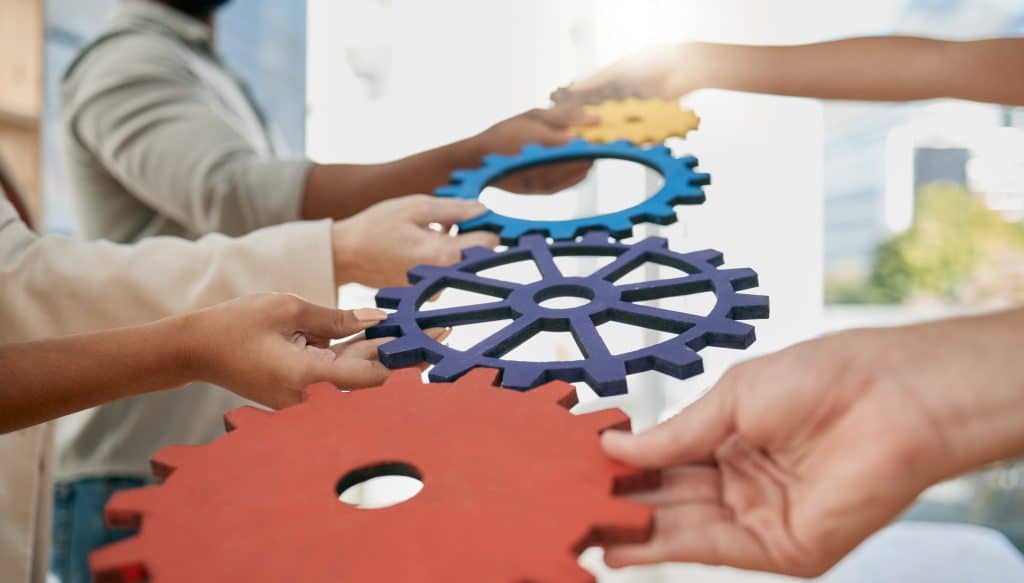
While project management focuses on execution, account management plays a complementary role.
Account managers help:
- Align stakeholders across departments
- Translate business needs into actionable direction
- Maintain consistent communication
- Ensure long-term goals are considered alongside short-term tasks
This combination creates a more cohesive experience—not just during the project, but throughout the entire client relationship. Strong ongoing website support ensures that progress doesn’t stop at launch, but continues to evolve alongside business needs.
Where AI and Automation Are Making an Impact
As digital projects become more complex, many teams are exploring how AI can improve efficiency.
In website project management, AI can assist with:
- Organizing tasks and timelines
- Identifying potential bottlenecks
- Summarizing communication threads
- Supporting workflow automation
However, AI works best when layered on top of a strong process.
Without clear structure and accountability, automation can actually introduce more confusion rather than reduce it.
The most effective approach is to use AI as a support tool—not a replacement for human oversight and strategic direction.

Common Signs Your Project Management Needs Improvement
If your organization is experiencing any of the following, it may indicate gaps in your project management approach:
- Projects frequently run behind schedule
- Teams struggle with communication and alignment
- Requirements change without clear tracking
- Stakeholders are unsure of project status
- Launch timelines continue to shift
These issues are rarely caused by lack of effort—they’re usually the result of insufficient structure.
Practical Takeaways
To improve website project outcomes:
- Establish clear ownership for all tasks and decisions
- Centralize communication and documentation
- Create a structured process for managing changes
- Define milestones and track progress consistently
- Align project execution with broader business goals
Even small improvements in these areas can significantly reduce delays and improve results.
Final Thought
A successful website project isn’t just about what gets built—it’s about how the entire process is managed.
With the right project management structure in place, organizations can reduce friction, improve collaboration, and deliver better outcomes across every stage of the project lifecycle.
At eLink Design, we work with organizations across the country to manage not just website builds, but the ongoing systems, communication, and processes that support long-term digital success.
If your team is planning a website project or managing multiple digital initiatives, having the right structure in place can make a measurable difference in outcomes.
Connect with eLink Design to learn how we support organizations with ongoing project management, account management, and website operations.