 Josh Reid
Search Is No Longer Just About Keywords
Search behavior is changing faster than many businesses realize.
For years, users interacted with search engines in predictable ways. People typed short keyword phrases into Google, reviewed a list of links, and clicked through websites to find information.
Today, AI is changing that process completely.
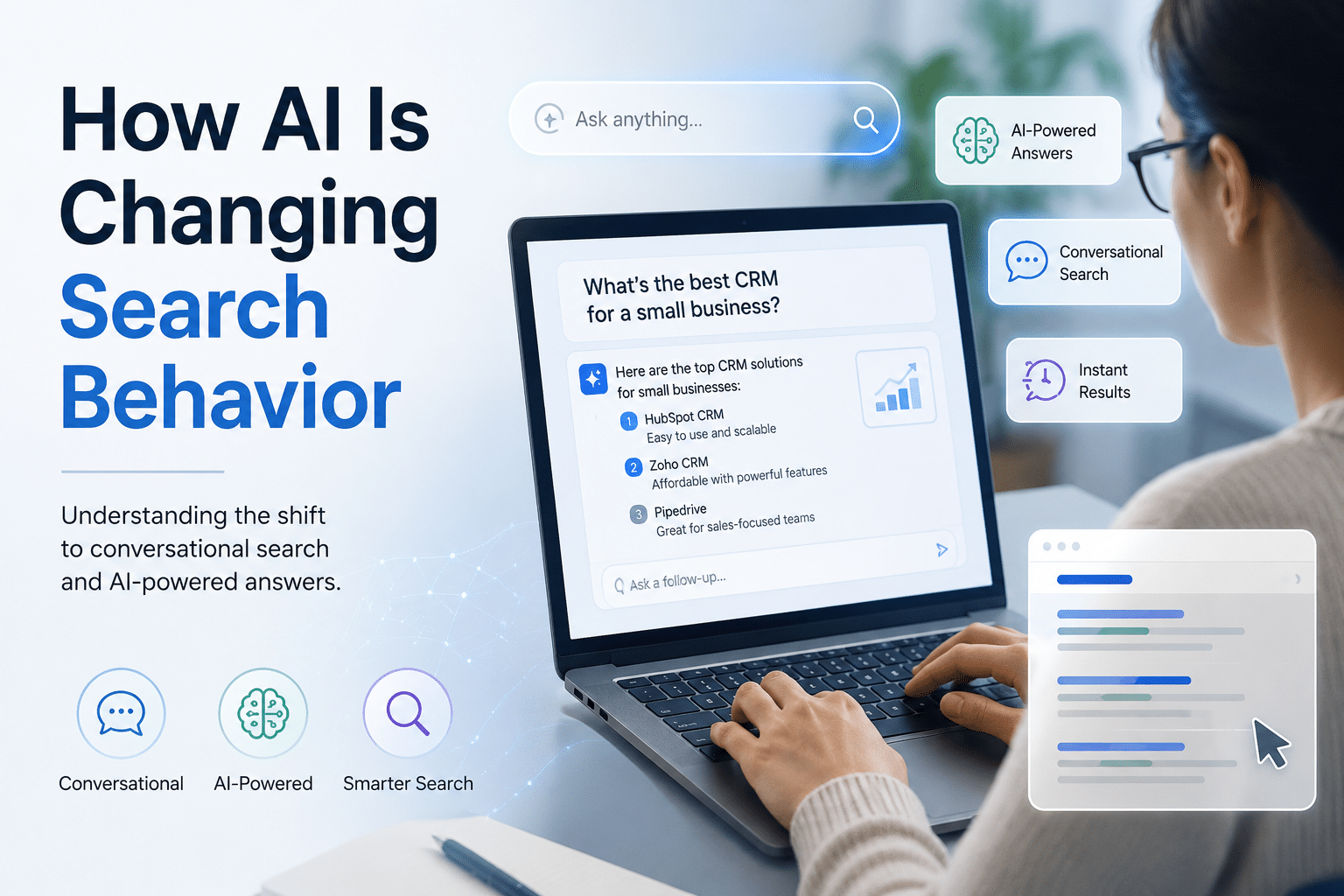
Users are now asking full questions, expecting direct answers, and relying on AI-powered tools to summarize information instantly. Platforms like ChatGPT, Google Search Generative Experience (SGE), Microsoft Copilot, and voice assistants are reshaping how information is discovered online.
This shift is changing not only how people search — but how businesses need to structure their digital content.
Understanding AI search behavior is becoming essential for modern visibility.
What Is AI-Driven Search?
Traditional search engines primarily matched keywords to indexed pages.
AI-driven search goes further.
Instead of simply finding matching pages, AI systems attempt to understand:
- context
- intent
- meaning
- user goals
- conversational phrasing
The result is a search experience that feels more like interacting with an assistant than browsing a directory of websites.
Instead of receiving only links, users increasingly receive:
- summarized answers
- recommendations
- comparisons
- direct explanations
- follow-up prompts
This is one of the biggest reasons Answer Engine Optimization (AEO) is becoming increasingly important alongside traditional SEO.
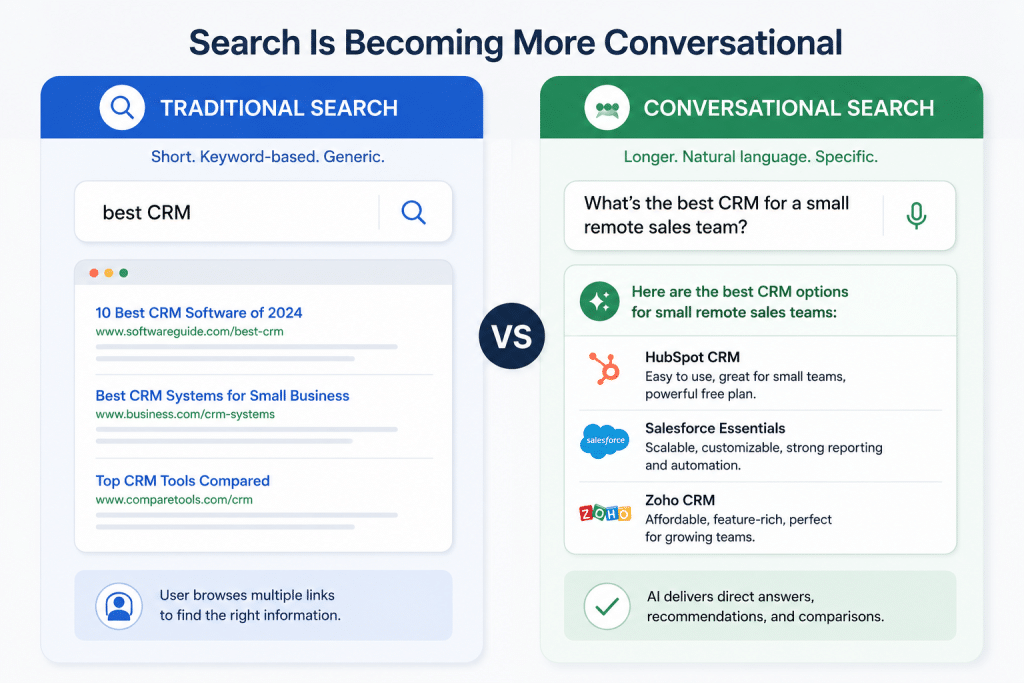
One of the biggest changes in AI search behavior is how users phrase searches.
Traditional Search Queries
Users once searched using short phrases like:
- “best CRM”
- “website design company”
- “marketing software”
Modern AI-Driven Searches
Now users ask:
- “What’s the best CRM for a small remote sales team?”
- “How much does a custom healthcare website cost?”
- “Which marketing software is easiest for beginners?”
AI tools encourage users to search the same way they naturally speak.
This means businesses must optimize content around real questions and real user intent — not just isolated keywords.
Why This Matters for Businesses
AI-driven search is changing visibility itself.
In traditional SEO, success often depended on:
- ranking position
- keyword targeting
- backlinks
- traffic volume
But AI search experiences are shifting attention toward:
- answer quality
- content clarity
- authority
- structured information
- conversational relevance
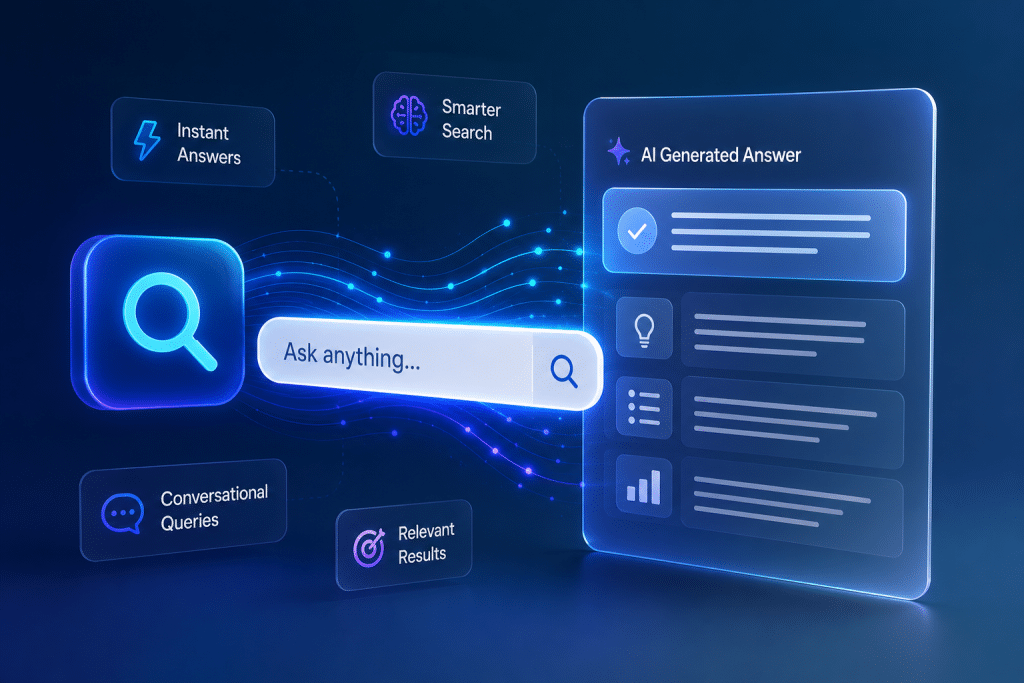
If your content is difficult to scan, overly technical, or poorly structured, AI systems may ignore it entirely — even if your rankings are strong.
This is especially important as zero-click search continues growing.
Users increasingly get the information they need directly from AI-generated summaries without ever visiting a website.
Real-World Example: Then vs Now
Traditional Search Journey
A user searches:
“project management software”
They:
- browse multiple websites
- compare providers
- open several tabs
- research manually
AI-Driven Search Journey

A user asks:
“What’s the best project management software for a small marketing team?”
AI may instantly provide:
- recommended platforms
- summarized pros and cons
- pricing comparisons
- suggested use cases
Tools like Microsoft Copilot are accelerating this shift toward AI-assisted discovery.
Businesses are no longer competing only for clicks.
They’re competing to become the trusted source AI systems reference.
If your audience is asking more conversational questions, your content strategy needs to evolve with them.
The Rise of Intent-Based Search
AI systems focus heavily on understanding intent.
Instead of matching only keywords, they attempt to determine:
- what the user actually wants
- what problem they’re solving
- what kind of answer is most useful
This means businesses should create content that addresses:
- practical concerns
- customer questions
- real-world scenarios
- decision-making factors
Generic content written only for rankings is becoming less effective.
Helpful, structured, question-focused content is becoming far more valuable.
How Businesses Can Adapt to Changing Search Behavior
The good news is businesses do not need to completely rebuild their digital strategy overnight.
But they should begin adjusting how content is created and structured.
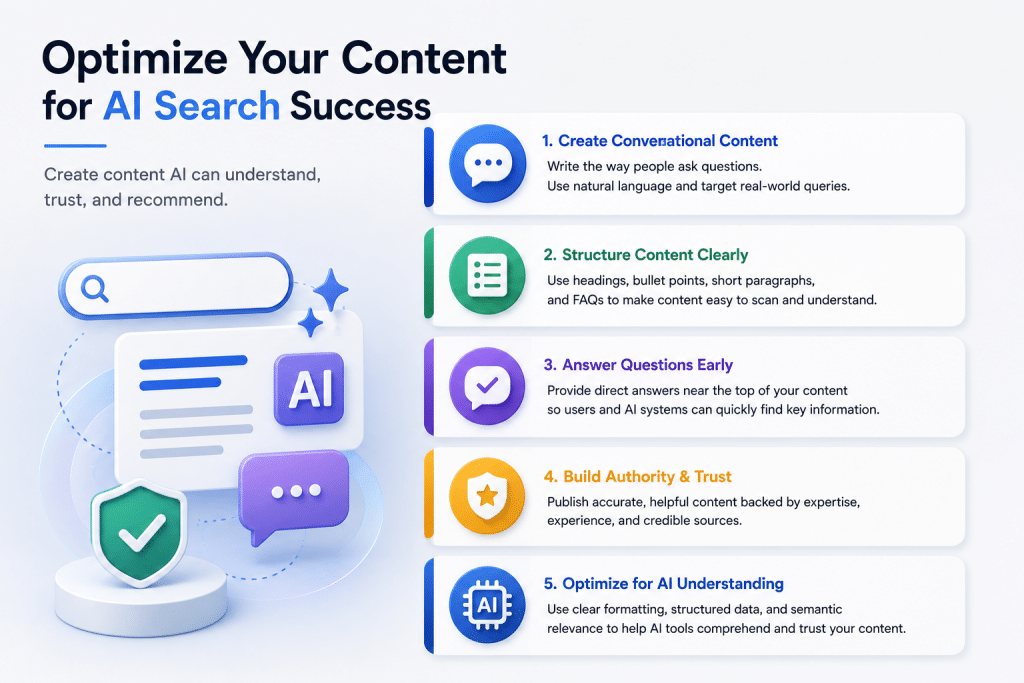
Create Conversational Content
Write the way real people ask questions.
Instead of only targeting:
- “CRM software”
also address:
- “What CRM software is best for small businesses?”
This aligns content with how users interact with AI-powered search tools.
Structure Content Clearly
AI systems prefer content that is easy to scan and interpret.
Use:
- headings
- bullet points
- concise explanations
- FAQ sections
- direct summaries
Clear formatting improves both user experience and AI readability.
Answer Questions Early
Do not bury important information deep within content.
Place direct answers near the top of sections whenever possible.
This improves:
- readability
- featured snippet opportunities
- AI answer extraction
Focus on Authority and Trust
AI systems prioritize trustworthy sources.
Businesses should focus on:
- accurate information
- expertise
- consistency
- helpful content
- strong topical authority
The future of search will reward clarity and credibility more than keyword volume alone.
Key Takeaways
- AI is changing how users search online
- Search behavior is becoming more conversational
- Users increasingly expect instant answers
- AI-generated summaries are reducing traditional clicks
- Businesses need content optimized for both SEO and AEO
- Structured, question-focused content is becoming more important
Final Thoughts
Search behavior is evolving rapidly — and AI is accelerating the shift.
Businesses that continue relying only on traditional SEO strategies may struggle to maintain visibility as search experiences become more AI-driven.
The companies that adapt early will be better positioned to:
- build authority
- increase discoverability
- stay competitive
- remain visible in AI-generated search experiences
The future of search is not just about rankings.
It’s about providing the best answers.
Ready to Adapt Your Strategy?
eLink Design helps businesses prepare for the future of search with AI-ready content strategies, modern web experiences, and digital solutions built for evolving search behavior.
Let’s make sure your business stays visible as AI continues reshaping how people search online.