 Josh Reid
Scope Creep Isn’t the Problem—Unmanaged Scope Creep Is
Almost every project starts with a clearly defined plan.
There are objectives, deliverables, timelines, and expectations. Everyone feels aligned and ready to move forward.
Then reality sets in.
A new feature gets requested.
A stakeholder wants additional functionality.
A marketing campaign expands its goals.
A website needs one more page.
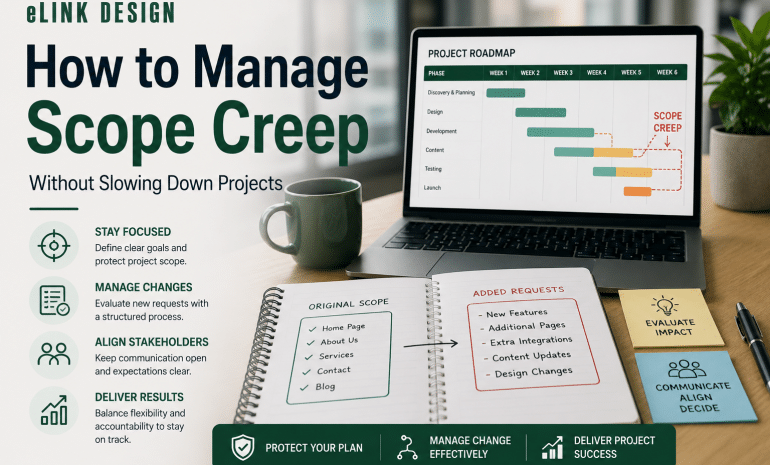
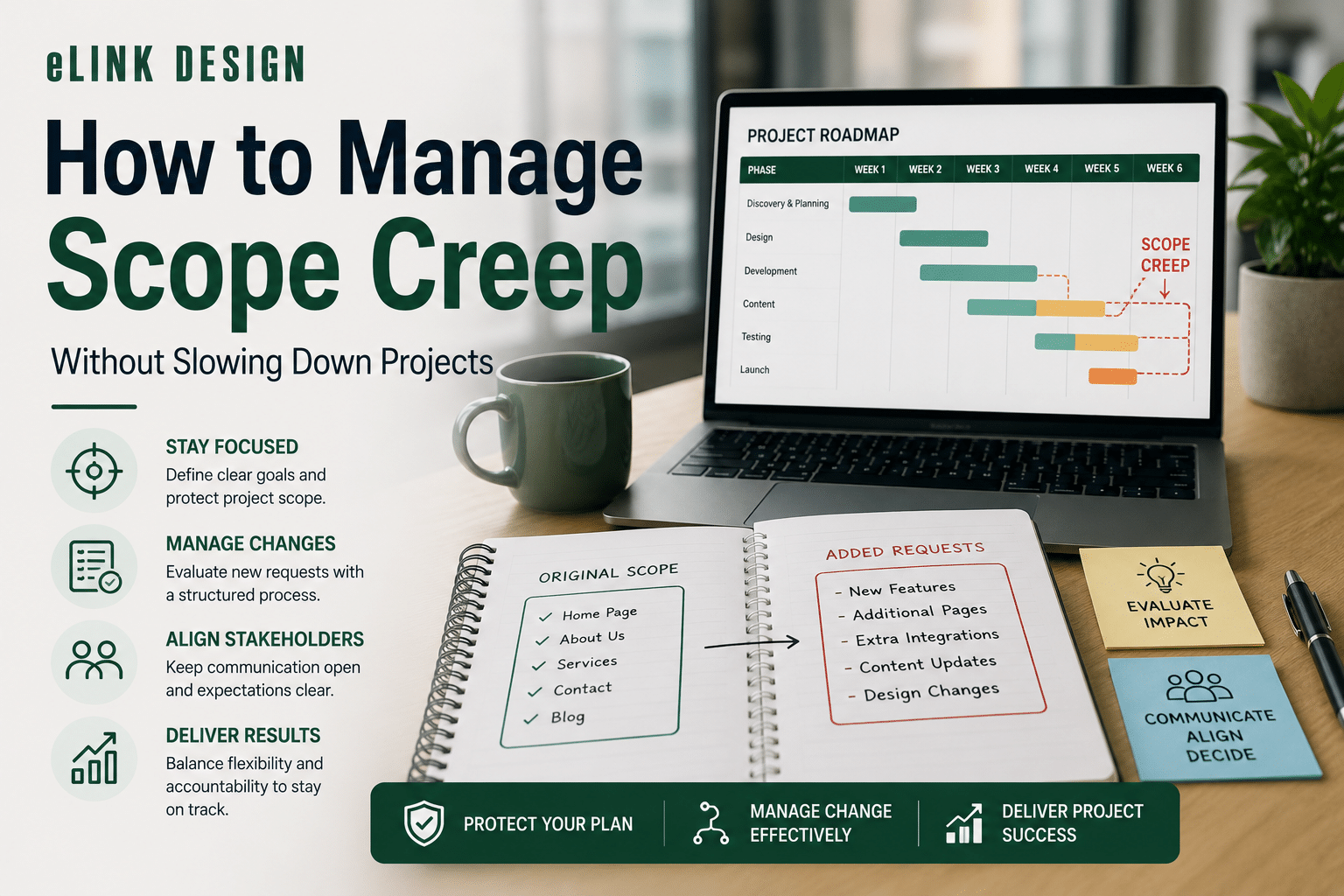
Individually, these requests may seem small. Collectively, they can significantly impact project timelines, budgets, and team workloads.
This phenomenon is commonly known as scope creep.
The important thing to understand is that scope creep itself isn’t always bad. Projects evolve. Businesses change. New opportunities emerge.
The real challenge is managing those changes in a way that protects project success.
What Is Scope Creep?
Scope creep occurs when a project’s requirements, deliverables, or objectives expand beyond the originally agreed-upon scope.
This often happens gradually through:
- Additional feature requests
- New stakeholder input
- Expanded deliverables
- Last-minute revisions
- Changing business priorities
Many organizations don’t realize scope creep is occurring until deadlines begin slipping or budgets start increasing.
By then, the impact is already being felt across the project.
Why Scope Creep Happens
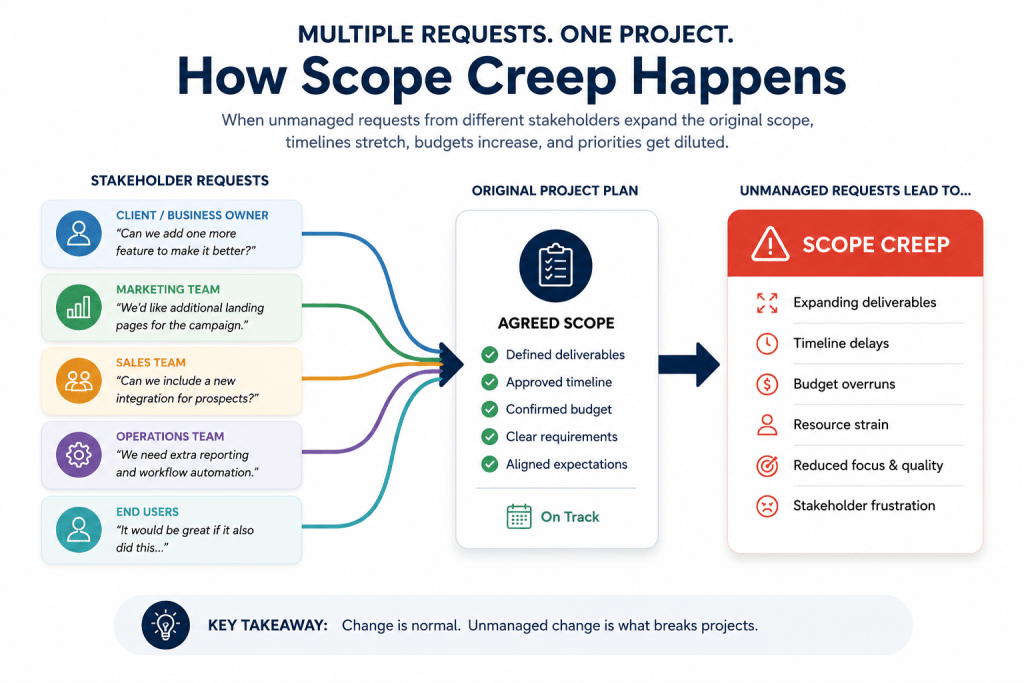
Scope creep rarely occurs because someone is intentionally trying to disrupt a project.
More often, it stems from good intentions combined with a lack of structure.
Common causes include:
Unclear Project Scope
If deliverables aren’t clearly documented, different stakeholders may have different interpretations of what is included.
Evolving Business Needs
Projects often span weeks or months. During that time, business priorities can shift.
Too Many Decision Makers
Additional stakeholders frequently introduce new ideas and requests after work is already underway.
Informal Change Requests
Quick emails, meetings, or verbal conversations can unintentionally become project requirements.
Lack of Change Management
Without a defined process for evaluating new requests, projects absorb changes without considering their impact.
The Hidden Costs of Scope Creep
Many teams focus on the direct impact of additional work.
The indirect effects are often much larger.
Scope creep can lead to:
- Missed deadlines
- Increased project costs
- Resource overload
- Reduced team morale
- Lower quality deliverables
- Client frustration
- Communication breakdowns
Even small additions can create significant ripple effects when multiple teams and dependencies are involved.
Signs Scope Creep Is Already Happening
Projects often show warning signs before major problems appear.
Watch for:
- Frequent “small” requests being added
- Deliverables expanding beyond original plans
- Repeated timeline adjustments
- Team members working outside documented requirements
- Stakeholders requesting work through informal channels
- Increasing confusion about priorities
Recognizing these indicators early allows project managers to address issues before they become larger risks.
How Effective Teams Manage Scope Creep
The most successful project teams don’t prevent every change.
They manage change intentionally.
Start With Clear Documentation
Every project should begin with a documented scope that outlines:
- Deliverables
- Responsibilities
- Assumptions
- Exclusions
- Timelines
Clear documentation creates a shared understanding from day one.
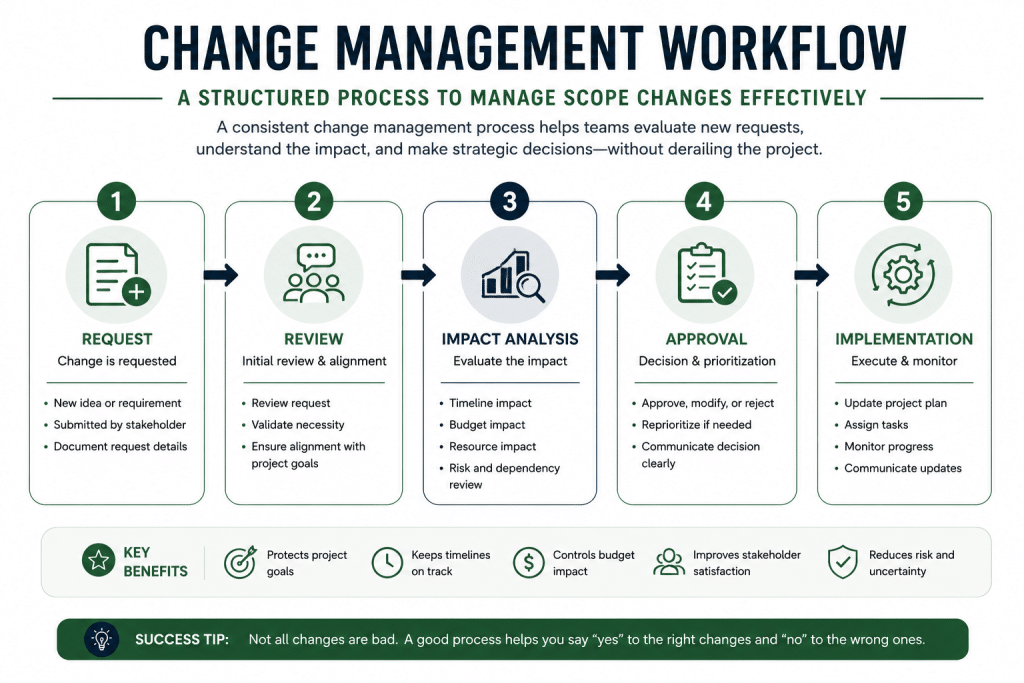
Establish a Formal Change Process
New requests should follow a structured evaluation process.
Before approving a change, ask:
- What is being requested?
- Why is it needed?
- What impact will it have?
- Does it affect timelines?
- Does it affect budget?
- Does it affect other priorities?
This ensures decisions are made strategically rather than emotionally.
Prioritize Based on Business Value
Not every request deserves equal attention.
Evaluate changes based on:
- Business impact
- Customer value
- Strategic importance
- Project objectives
High-value changes may justify adjustments. Low-value additions may be better suited for a future phase.
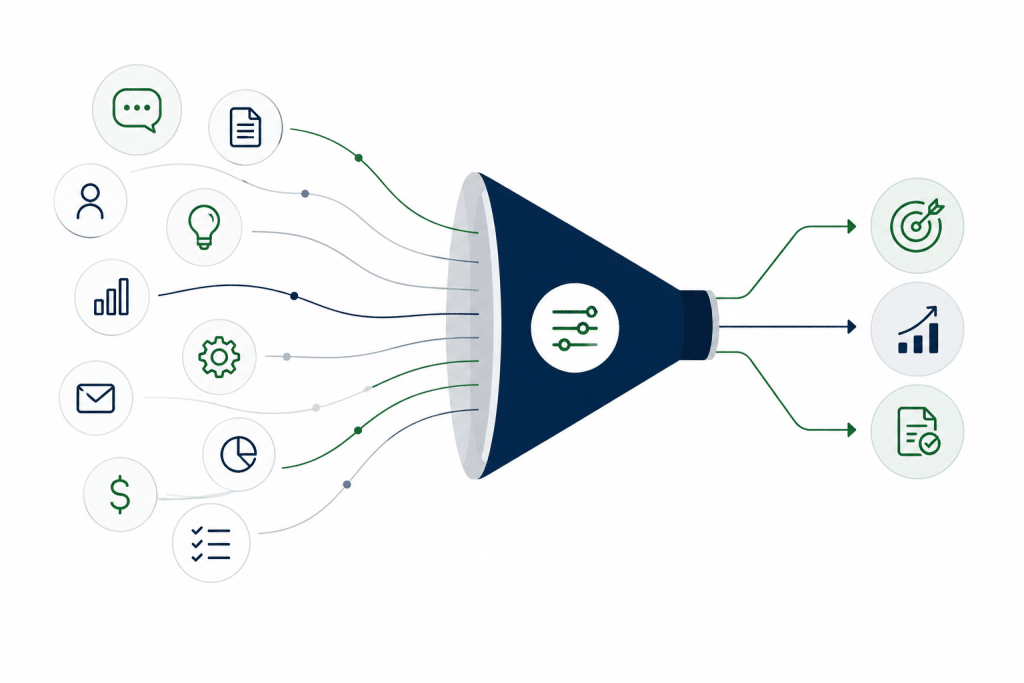
One of the biggest misconceptions about project management is that success comes from saying “yes” to every request.
In reality, successful projects often depend on knowing when to pause, evaluate, and prioritize new ideas before committing resources.
A structured approach to change management helps organizations remain flexible without sacrificing accountability.
The Role of Account Management in Scope Control
Strong account management plays a critical role in preventing scope creep from becoming a project risk.
Account managers help:
- Clarify client expectations
- Communicate project boundaries
- Evaluate change requests
- Align priorities with business goals
- Maintain transparency around timelines and budgets
When clients understand how changes affect project outcomes, conversations become more collaborative and productive.
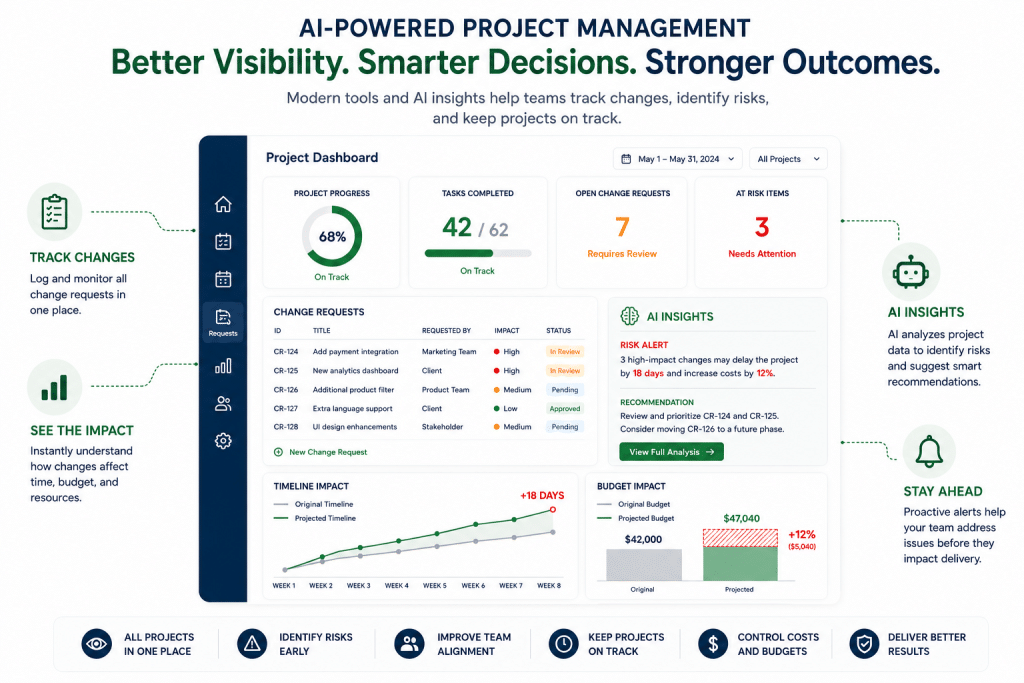
Using Technology and AI to Track Scope Changes
Modern project management tools provide visibility into project changes and dependencies.
Teams can use technology to:
- Track change requests
- Monitor timelines
- Manage approvals
- Document decisions
- Improve reporting
AI-powered tools are increasingly helping teams:
- Summarize project updates
- Identify potential risks
- Flag timeline impacts
- Analyze project workloads
These tools don’t replace project leadership, but they provide valuable visibility and support better decision-making.
Key Takeaways
- Scope creep is common in nearly every project.
- Unmanaged changes create delays, cost overruns, and confusion.
- Clear documentation reduces misunderstandings.
- Formal change management protects timelines and budgets.
- Account management helps align expectations and priorities.
- AI and project management tools improve visibility and risk awareness.
Final Thoughts
Projects evolve. New ideas emerge. Business priorities change.
The goal isn’t to eliminate change—it’s to manage it effectively.
Organizations that establish clear scope definitions, structured change processes, and strong communication practices are better equipped to adapt without losing momentum.
At eLink Design, we help organizations balance flexibility with accountability, ensuring projects stay aligned, efficient, and focused on delivering meaningful business results.
Experiencing project delays caused by shifting priorities or expanding requirements?
Contact us today to learn how better project controls can keep your projects moving forward.